


How Virgin Media O2’s failed takeover gambit cost 4,000 jobs
How Virgin Media O2’s failed takeover gambit cost 4,000 jobs

James WarringtonSun, November 8, 2026 at 1:00 PM UTC
0

When Mike Fries, the 63-year-old boss of Virgin Media O2 (VMO2) parent company Liberty Global, mounted a defence of the £2bn broadband takeover he had engineered, his strategy was scattergun.
“Who is going to build a scale-based competitor to BT Openreach?” he said at a conference in London this year. “Who has the capital, the wherewithal, the customers? I don’t think there’s anybody else.”
Criticism levelled at the deal by rivals was merely “sour grapes”, he insisted, while simultaneously threatening to pull investment in the UK if it was blocked on competition grounds.
But his warnings fell on deaf ears. The Competition and Markets Authority (CMA) signalled last month that it was likely to block VMO2’s takeover of Netomnia on fears it would push up prices for customers.
The apparent failure has set off fears that VMO2, owner of Britain’s second-largest broadband network after BT, is headed for danger over its £22bn debt pile.
The Netomnia takeover promised a vital lifeline to help pay down this debt. With that deal on the ropes, bosses are now preparing to cut 4,000 jobs in an attempt to strip out £800m of costs.
It is a sobering shake-up for a company hoping to secure its position as the second-largest player in Britain’s cut-throat broadband market. Yet some analysts warn that it might not be enough.
VMO2, which is jointly owned by Liberty Global and Telefónica, was formed through a £31bn merger of Virgin Media and O2 in 2021.
The deal gave it the scale to compete against BT as a converged mobile and broadband operator. But it also loaded the combined company up with debt.
While Telefonica’s O2 arrived debt-free, Liberty’s Virgin Media contributed a £11.3bn debt pile, a legacy of the chaotic cable rollout of the 1990s.
A major debt recapitalisation, which was used to fund a £7.1bn payout to the parent companies, pushed this up above £18bn. Total debt has since climbed further to around £22.4bn.
In many ways, it was a textbook deal for Liberty Global, the Bermuda-domiciled telecoms group controlled by cable cowboy John Malone. The company had partly been attracted to Virgin Media by the lawful tax avoidance opportunities offered by its historical debts.
Liberty Global, which has its London base in plush offices just off the King’s Road in Chelsea, has gained a reputation for debt-fuelled takeovers and financial engineering. Its other UK investments include Formula E, ITV and film producer Lionsgate.
To date, the merger has paid off handsomely. Liberty and Telefónica have extracted more than £12bn from VMO2 through cash payouts and dividends.
Fries, meanwhile, has been paid more than $200m ($149m) since the formation of VMO2. Over the past decade, his pay stands at $484m, including $123m pocketed in 2019 alone.
Bosses argue that VMO2 has invested £11bn in the UK since the merger. Yet while its shareholders were feathering their nests, the backdrop for VMO2 was beginning to darken.
Fierce competition from a flood of “alt-net” rivals and lower-than-expected uptake of full-fibre have put pressure on all broadband providers. Meanwhile, rising interest costs have pushed up the cost of servicing debts.
Fitch Ratings downgraded VMO2 to B+ in June, pushing it deeper into speculative “junk” territory.
Among the reasons cited for the downgrade were a ballooning debt pile, shrinking revenues and cash flow, growing competition and the large funding requirements of its fibre build.
But the downgrade risks exacerbating VMO2’s troubles, making it harder to borrow new money to pay down existing debt. Where it can obtain new debt, the company is likely to find borrowing has become more expensive.
The warning that spooked the markets the most was that VMO2’s debt-to-Ebitda (earnings before interest, taxes, depreciation and amortisation) ratio of 6.1 times had severely breached safe thresholds. It has since reduced to 5.56 times.
With concerns mounting, a sell-off began over the summer. The company’s US junk bonds were selling for as little as 42p in the pound, suggesting traders believe there is a slim chance of them being fully repaid. Rivals and VMO2 insiders believe the company faces inevitable financial restructuring.
It wasn’t meant to be this way for Fries and his charges. For VMO2, the Netomnia deal offered a lifeline. The complex transaction would see Nexfibre – a joint venture between Liberty Global, Telefónica and French infrastructure fund InfraVia – take control of Britain’s second-largest alt-net.
Under the terms of the deal, VMO2 would be handed a 15pc stake in Nexfibre in exchange for migrating 4.6 million homes onto its network. Crucially, it would incur no net-cash cost. Instead, VMO2 would receive £950m, which would help pay down debt, though it would also be liable for future fees to access Nexfibre’s network.
It was a deal that aimed to reward all parties. What bosses had failed to consider, however, was the CMA’s dogged response.
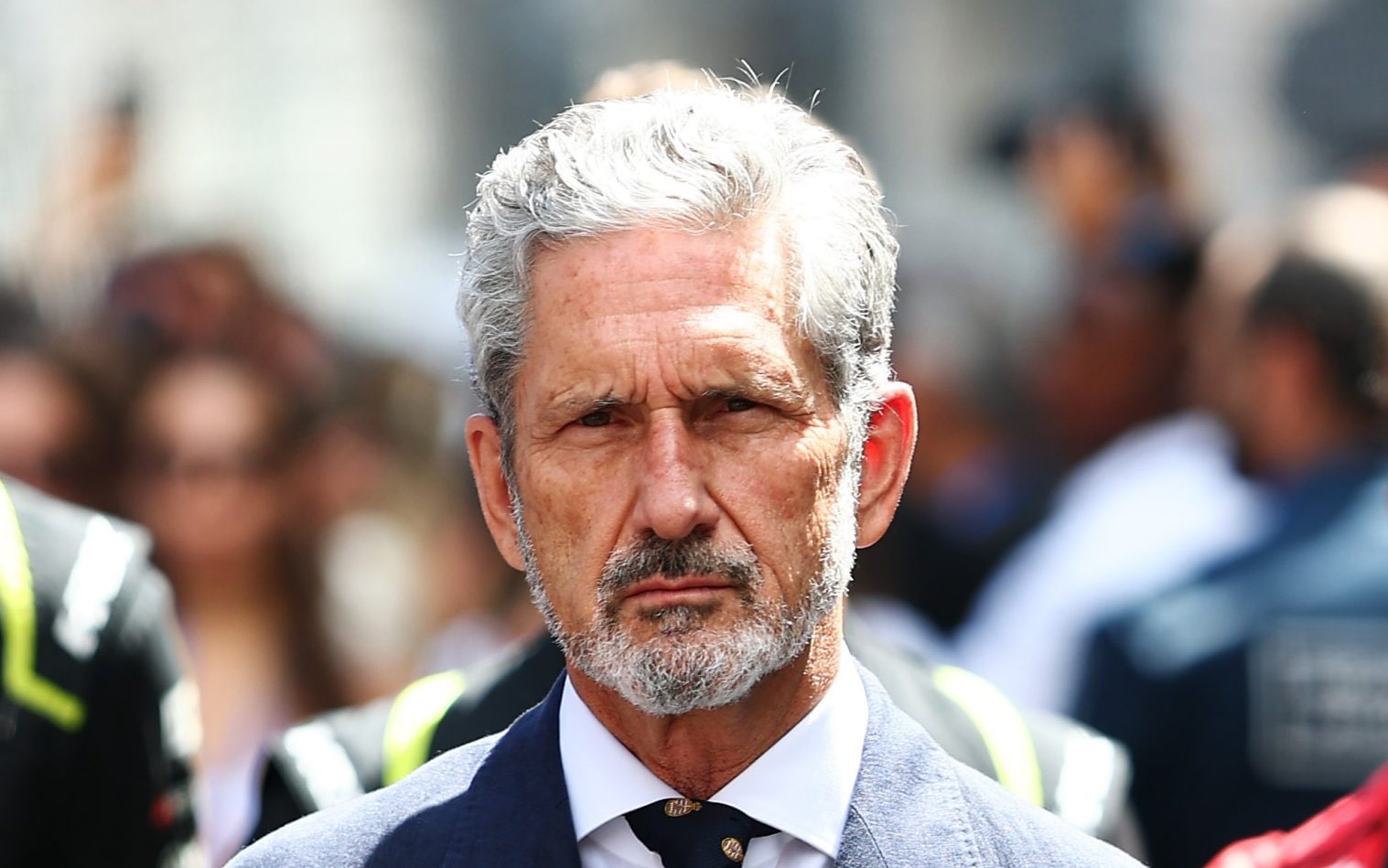
Mike Fries, the chief executive of Liberty Global, has been paid more than $200m since the formation of VMO2 in 2021 - Getty/Simon Galloway
Fries this week described the regulator’s intervention as a “bit of a wake-up call”, adding: “Never did we anticipate that this transaction with Netomnia would encounter such fierce resistance.”
The competition watchdog has not yet reached a verdict on the deal, but VMO2 has already smashed the glass on a punishing cost-cutting plan.
Around 4,000 jobs are expected to go, delivering £300m in savings. The company will halt upgrades to its broadband network, while it is considering scrapping its dividend.
Advertisement
The cost-cutting programme was brought forward in an effort to ease concerns in the bond market. Some observers note that the heavy cuts may also help to strengthen VMO2’s case to the CMA, which will issue its final decision by Dec 15.
The programme has underwhelmed many analysts, however, who argue they were already overdue.
Matthew Howett, at Assembly Research, says that VMO2 “needed to get their house in order anyway”. He adds: “There was an element of this that needed to happen anyway, and we’re now just seeing it in the cold light of day and it’s made a bit more critical by that [CMA] decision.”
James Ratzer, at New Street Research, says: “If you look at what’s going on within their business, they have been paying out dividends to the shareholders while revenues have been under pressure and the debt burden has been growing. So I think cost-cutting is a necessity.”
Perhaps more concerningly for VMO2 and its future finances, however, are the challenges in its underlying business. In the age of full-fibre BT, its broadband business depends on consumers paying more for an arguably inferior technology.
The company shed a further 23,000 customers in the third quarter, while its average revenue per broadband customer fell 5pc to £45.83. Analysts point both to tough competition and a reduction in the number of additional services, such as TV, that customers are taking.
Ratzer describes falling service revenues as the “melting ice cube” in VMO2’s business.
There is something else at play, too. VMO2, which has long faced criticism for its poor customer service, has been hit by Ofcom’s “one-touch switching” policy, which came into force in September 2024.
“One-touch switching has definitely been a very damaging thing for their business, and that’s what’s caused them to change strategy,” says Ratzer. “Now it’s become easier for customers to leave, they’ve suddenly had to change tack to be more proactive with price reductions.”
VMO2 argues that an operational turnaround is underway under Lyssa McGowan, a former Pets at Home and Sky executive who was brought in to lead the company’s consumer operations this summer.
McGowan served at Sky under Stephen van Rooyen, the media giant’s former UK boss who was appointed to lead Ziggo Group, another Liberty-owned telecoms operator that is being lined up for a stock market float next year. She in turn has appointed two other former Sky executives to lead the Virgin Media and O2 brands.
But the appointments have fuelled speculation that Liberty is preparing to parachute the well-regarded van Rooyen to replace long-serving Lutz Schüler as chief executive of VMO2, though sources close to the company denied this.
A VMO2 spokesman said: “Virgin Media O2 continues to be a vastly successful telecoms combination and a major competitive force in the market with strong underlying assets. The decisions and actions we’re taking now are necessary to transform for the future.”
The spokesman pointed to VMO2’s £11bn investment, its 5G and satellite mobile offering and its gigabit broadband network reaching almost 19 million homes, adding: “There’s work to do and challenges to navigate but Virgin Media O2 is focused on delivering for the long-term.”
A Telefónica spokesperson said: “Telefónica has invested more than €33.3bn (£277bn) in the UK. In 2005, we made the strategic decision to enter the UK market through the acquisition of O2 and, in 2020, we announced the merger of O2 and Virgin Media. These decisions reflect our commitment to the country for more than 20 years.
“VMO2 remains the strongest challenger to BT/Openreach in a highly competitive sector where other relevant players are under financial challenges. We believe VMO2 is the result of a successful integration, with a strong competitive position and a valuable asset base. It is now undertaking the transformation needed to position the business for the future.”
Still, with the business under pressure, VMO2 is facing searching questions over its future.
There is a real concern in the market that the company may default on its debts, with focus centred on £1.6bn of debt maturing at the start of 2029. A further £12.3bn of maturities then fall between 2030 and 2032.
Enders Analysis estimates that refinancing the 2029 bonds at current prices would cost VMO2 at least an extra £1bn in interest costs, an amount it describes as “ruinous”.
In fact, the prices of some bonds have plunged to levels that suggest investors believe there is little-to-no chance of repayment.
“The market’s telling you a restructuring is an inevitability when bond prices are at that level,” says Ratzer.
Sona Asset Management, the London-based hedge fund that specialises in distressed debt and restructuring, has stepped up its exposure to VMO2’s high-yield bonds in recent months.
Sona, along with fellow creditors BlackRock and Pimco, recently tapped the law firm Millbank to advise on the fallout from the faltering Netomnia deal.
Vulture funds are also understood to have begun snapping up the company’s junior debt after the recent sell-off. They are seen as positioning to drive a hard bargain in the expected restructuring discussions, potentially including swapping some of the debt for shares in VMO2, which may ultimately make its way to the public markets.
An alternative would be for shareholders to inject more equity into the company in exchange for a debt write-down.
The Enders analysts added: “VMO2 simply has to regain the confidence of the debt markets, or it will be forced into debt restructuring, with its current shareholders having their shareholding significantly diluted and/or having to inject further funds.”
With pressure rising, Fries this week insisted that Liberty Global did not intend to put corporate cash into its telecoms business.
Pressed on whether he could be forced to put cash into VMO2 as part of a restructuring, however, he demurred: “This is not a crisis, so I’m not prepared to address that hypothetical at all.”
Source: “AOL Money”
