


It is very hard to see a clear strategy in Arsenal’s summer
It is very hard to see a clear strategy in Arsenal’s summer

Sam WallaceSat, August 15, 2026 at 7:00 AM UTC
0
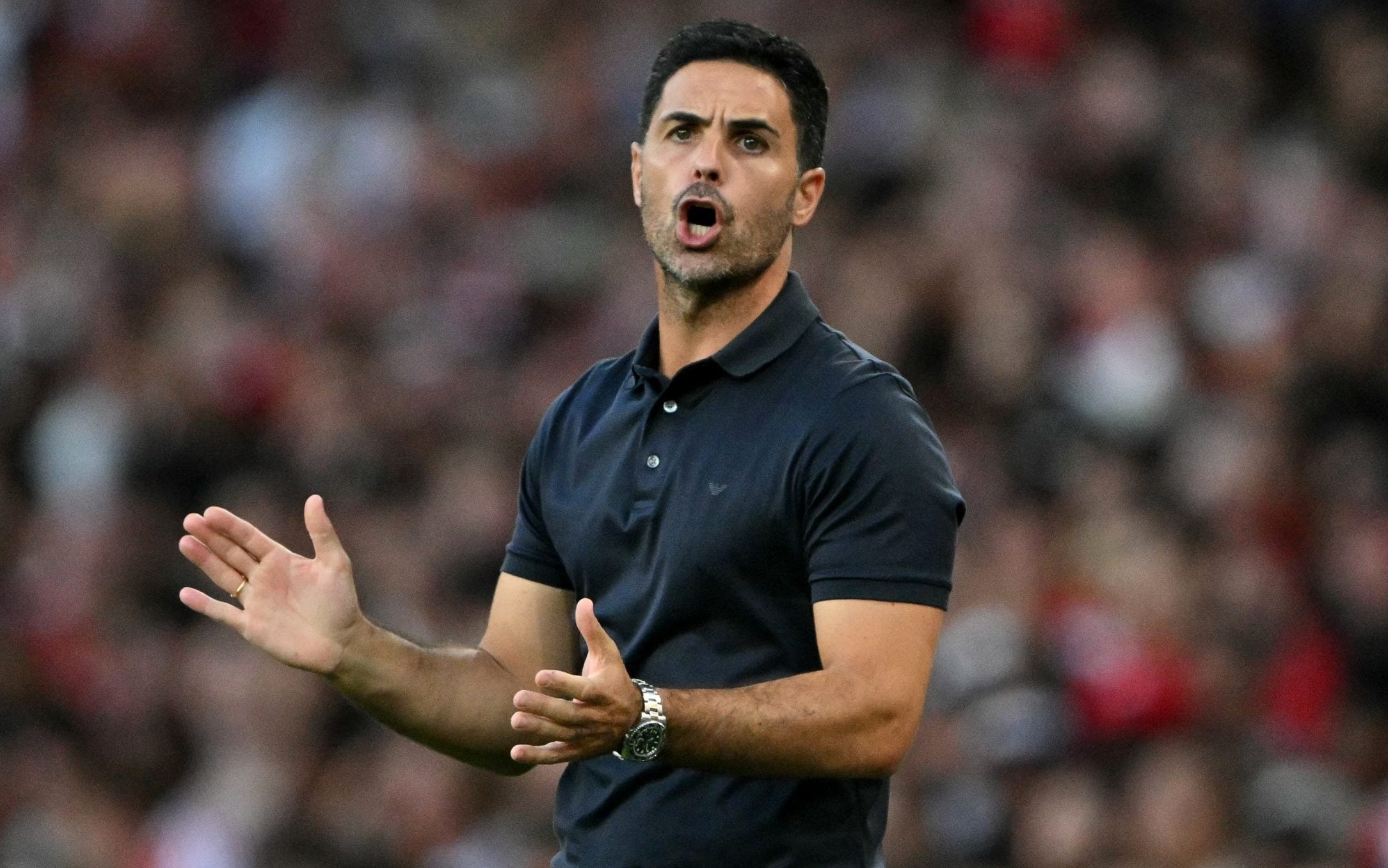
Mikel Arteta insists he is happy with his Arsenal squad despite missing out on various transfer targets - Glyn Kirk/Getty Images
Mikel Arteta’s call to arms in the wake of defeat in the Champions League final on May 30 was intended to set the tone for a summer in which Arsenal were to trade at least as decisively as they did 12 months earlier.
Yet 76 days on, as he prepares to take on Manchester City in the post-Pep Guardiola era in Sunday’s Community Shield, it was a very different approach from Arteta on Friday.
In Budapest he had sounded a dark warning about the future and the need to show ambition. “It is going to demand us to be very ambitious, very fast and very smart,” he said then. Thus far one would be hard-pressed to make a case for any of those being fulfilled.
Renewing squads, buying and selling, complying with financial regulations – as well as placating a manager of boundless ambition and an occasionally parsimonious ownership – is not easy. But even so, it is hard to discern a clear strategy in this Arsenal summer. From Vinícius Júnior to Jarell Quansah, there seems to be a variety in the names and the kind of funds required to sign them.
The club have spent about £150m on three players, although £35m of that is on Piero Hincapié, a loan-to-buy agreement with Bayer Leverkusen created last summer as Arsenal hit their spending limits. The winger Christos Tzolis, a fine prospect, cost £34m, and then there is Bruno Guimarães. A £38m deal in 2022 for the player, then at Lyon, was rejected by Arteta. Four years on, the Newcastle United captain represents a significant fee for a 29-year-old.
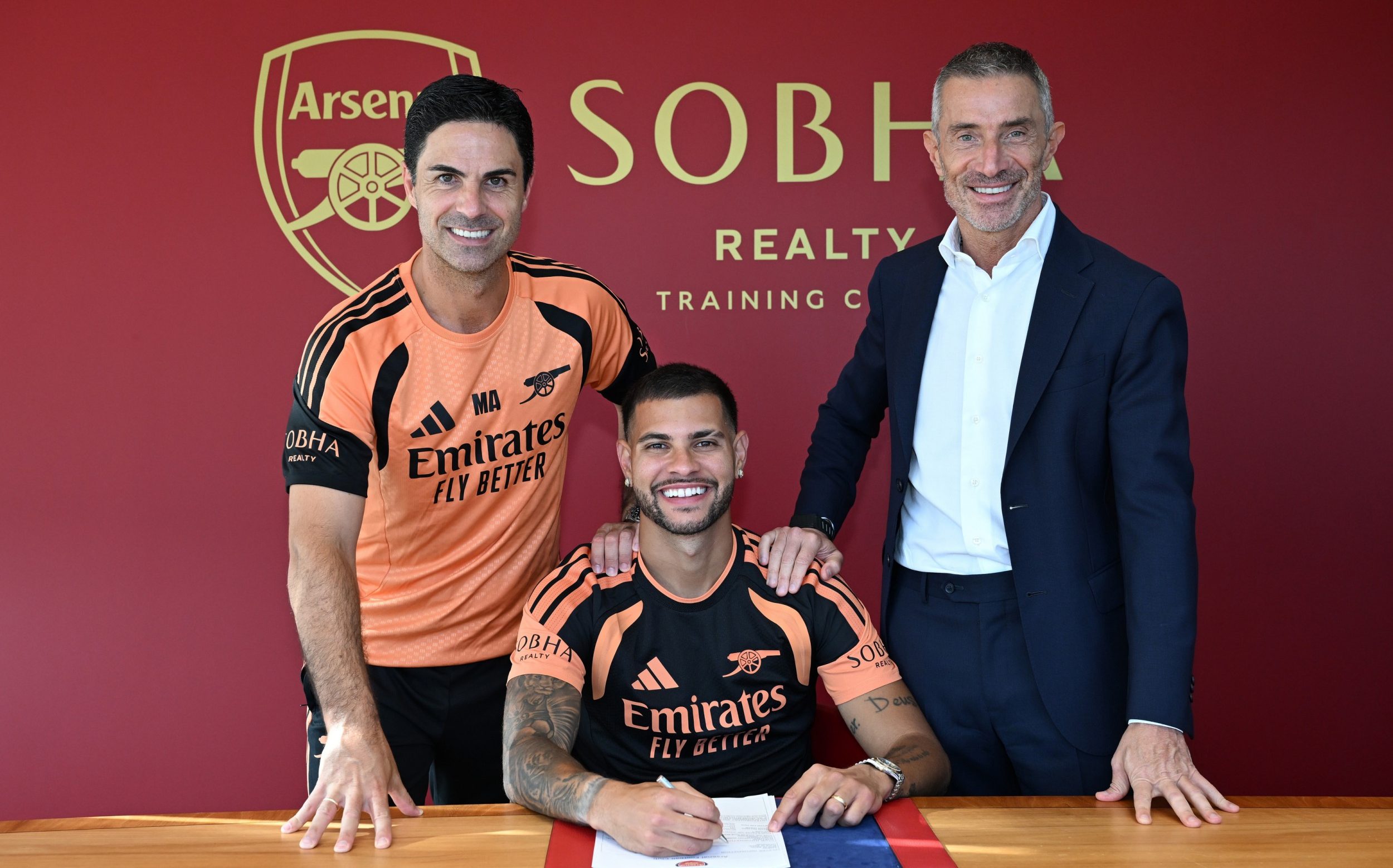
Arsenal paid £75m for Bruno Guimaraes this summer after passing on the midfielder when he was rated at £38m in 2022 - David Price/Getty Images
There are different views on how much he cost, but one school of thought is that the £75m is supplemented by add-ons that will take the price up further. As for Arteta, he was prepared to project a much sunnier view of the trading so far.
It all finishes late on September 1, after which he said he will address the question of his own future, another reason why the next two weeks could hardly be more critical.
There has been much activity in the window, with its brief period of Vinícius courtship, the Morgan Rogers episode and the uncertainty now over Myles Lewis-Skelly’s position. The Julián Alvarez moment seems to have passed for now. Jeremy Monga, 17, went elsewhere. As for Arteta, he was more circumspect than in Budapest.
“I am really happy with the squad, the players I have,” he said at the club’s training ground, “and I am really happy with the ambition of the club. There is zero question about that. And we have shown that in the manner we have tried to act. But we need to do it our own way.
“We have super-strengths and we have other areas we need to be very conscious [about] because we don’t have the elements or the structure that other clubs have. We are always on it and we will do what we believe is the right thing to do.”
That answer did suggest that he was more accepting of the position the club finds itself in after £268m of signings last summer that came after the end of the financial year. The club needs sales: about £30m has been raised thus far through the departures of Leandro Trossard, Christian Norgaard and Jakub Kiwior.
For that reason Lewis-Skelly’s value in the market was tested this week. The player appears to have been offered, by an intermediary, to Chelsea and Manchester United, the latter of whom would have an interest at the right price. Where that leaves the 19-year-old is another question. He signed a new contract last year and his return to the team in midfield at the end of the season was a crucial factor in securing the title, and he also started the Champions League final.
Lewis-Skelly could be forgiven for some confusion over his status. Arteta is walking a difficult line. He knows that the club has to generate fees to comply with Premier League and Uefa financial controls. In a liquid modern transfer market, that means there are few players considered unsellable at any club.
Advertisement
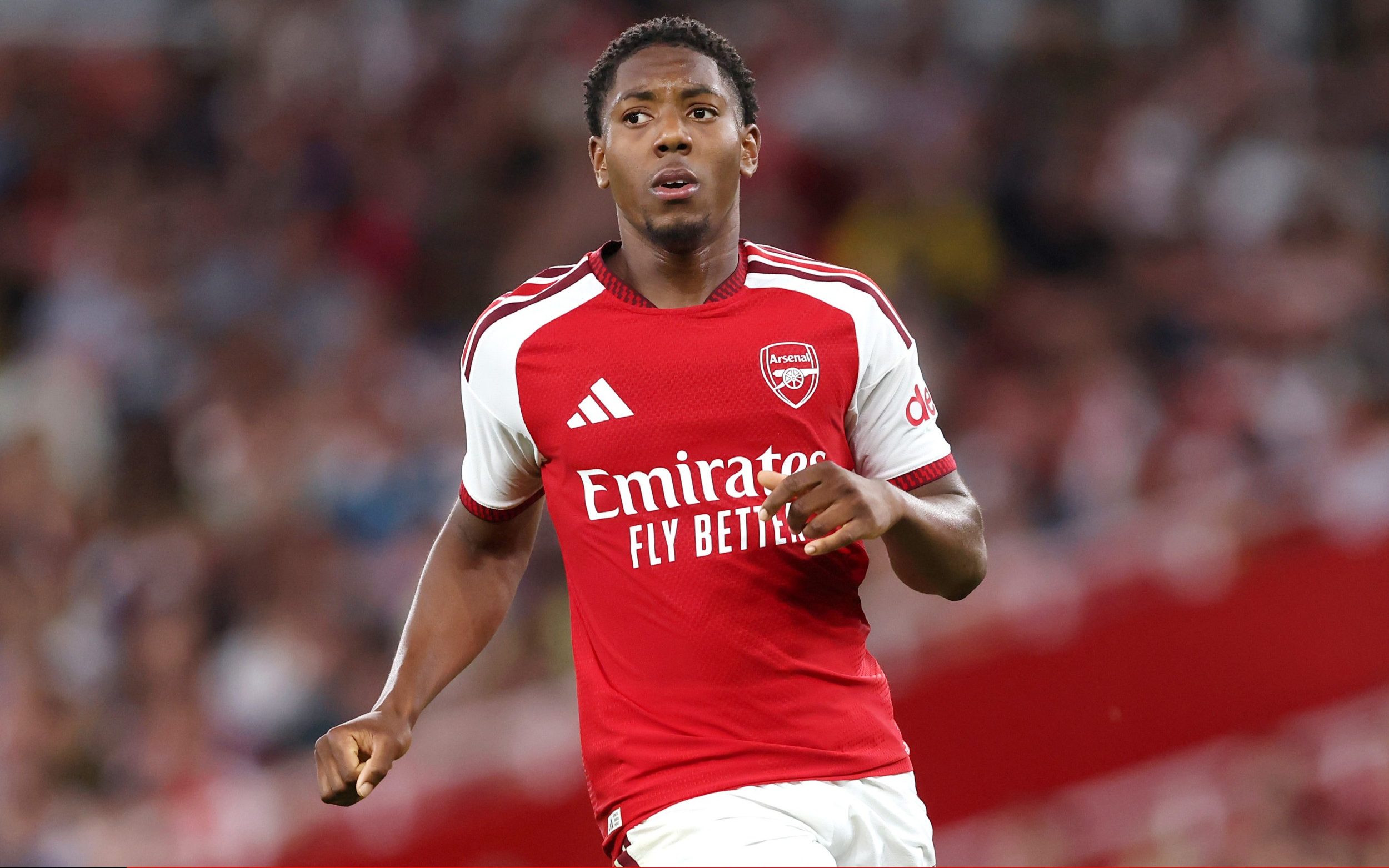
Myles Lewis-Skelly’s Arsenal future appears to be in doubt despite signing a new contract last year - Catherine Ivill/Getty Images
Where might Lewis-Skelly play this season? “Depends,” Arteta said. “Depends what happens with the squad. Depends how he trains. Depends on the position. A lot of factors, nothing else. There’s a lot of players that can play in various positions. And there’s a huge quality that we have in the squad.”
Not a ringing endorsement and there are others. The Vinícius connection will have played on the mind of Gabriel Martinelli, now the first-choice left-sided attacker after Trossard’s departure. Martinelli is another whom Arsenal would sell if a market could be generated. So too Gabriel Jesus. The same is the case for Ethan Nwaneri and certainly for Fábio Vieira, both on loan last season.
Where did the Vinícius idea come from? Within the club many felt it utterly implausible that Arsenal would pay about £150m for a player with one year left on his contract and wages of £400,000 a week, but it was left to burn bright for a few weeks. Arsenal would have liked to sign Sandro Tonali in January but held back because of the preoccupation with sales. Adding the most expensive player in their history six months later would have felt foolhardy, to say the least.
By Friday there was a new preoccupation: Quansah from Leverkusen while Arsenal wrestled with the scale of William Saliba’s injury. There was no plan at Leverkusen to sell the England international, although of course there is always a fee big enough to break that resistance. If that is about €80m (£68m) it is hard to see Arsenal agreeing. Ezri Konsa, Quansah’s England team-mate, is another option, and perhaps Andrea Berta, the Arsenal sporting director, is trying his usual tactic of keeping all options open.
Meanwhile Berta is under pressure to make some sales. Nwaneri, back from an unproductive loan at Marseille, is another, but his value has declined in the last 12 months. Arteta hinted at another Nwaneri loan, but the reality is that Arsenal need a sale. “If he [Nwaneri] stays here it’s because we can guarantee that he can have those minutes,” Arteta said. “Otherwise it’s just something that is not good for anybody.”
The backdrop to this is Arteta’s contract, which has this season to run. “There is always another priority,” Arteta said on that question, “and that’s the way we have been treating it. Everybody feels comfortable that the time on the contract is not going to be an issue.”
Which is not to say that he will be cheap for Arsenal. The club asked him to make a proposal in January and what came back was on a scale significant enough that it was set aside for a while. Now with a Premier League title and runners-up in the Champions League, it will be hard to negotiate down from there.
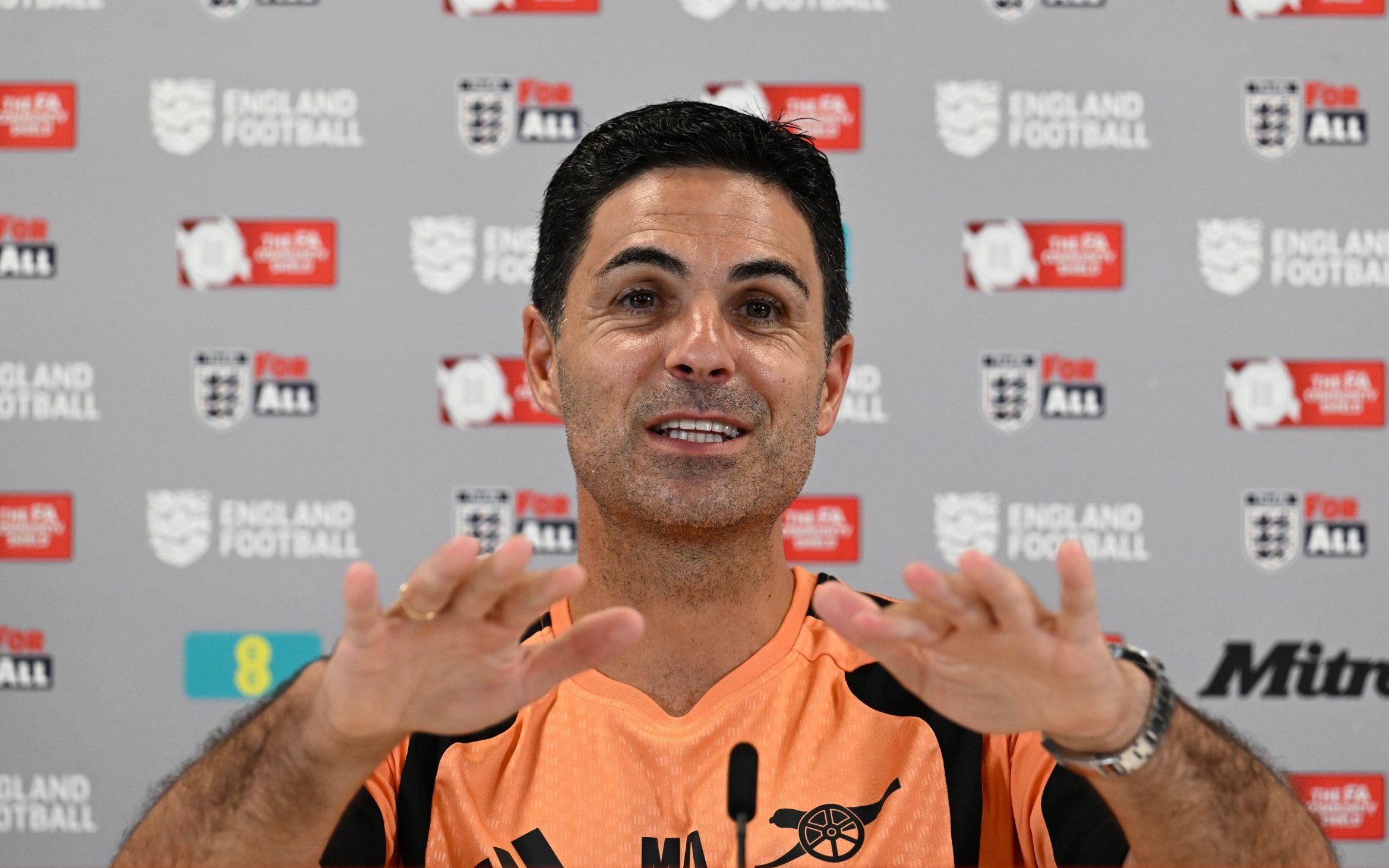
Arteta’s contract has one season to run but he insists ‘everybody feels comfortable’ regarding negotiations - David Price/Getty Images
Arteta says that his three players who went to the final weekend of the World Cup – Declan Rice, Bukayo Saka and Martín Zubimendi – are all back and ready to play in Cardiff in the Community Shield.
He has also made major changes to his backroom staff with the sacking of Dr Zafar Iqbal, the head of medicine, and the departure of Tom Allen, head of sports science and performance. Both men were well-established figures at the London Colney training ground where Arteta’s friend and adviser, the Spanish physiotherapist Joaquín Acedo, now exerts quite some influence.
Arteta thanked Iqbal and Allen for their contributions, and he was vague about the reasons for the change of two senior backroom staff members. “We will look to improve and evolve in certain areas. We need to look across the club and we have made certain decisions that will help us in the medium and long term to be better.”
Arsenal have never failed to comply with financial controls. Indeed it was their manager, Arsène Wenger, who first identified the requirement for them. Wenger coined the phrase “financial doping” that resonated with his compatriot Michel Platini, then Uefa president, who introduced the first iteration of financial fair play. For those now in charge of Arsenal, including Josh Kroenke, son of Stan, and Richard Garlick, the chief executive, that legacy will surely be all important.
Arsenal may also look at the way others have complied with financial controls throughout the years and ask whether those approaches were within the spirit of the rules.
With record commercial revenues, and success on the pitch, as well as new controls that restrict spending to a percentage of revenue, the conditions should favour Arsenal. But it has not been an easy summer – when it comes to buying or selling – and the longer it goes on, the harder those decisions become.
Source: “AOL Sports”
