


South Korea's Kospi falls in volatile trade as investors look beyond the chip boom
South Korea's Kospi falls in volatile trade as investors look beyond the chip boom

Huileng Tan Thu, July 2, 2026 at 4:36 AM UTC
0
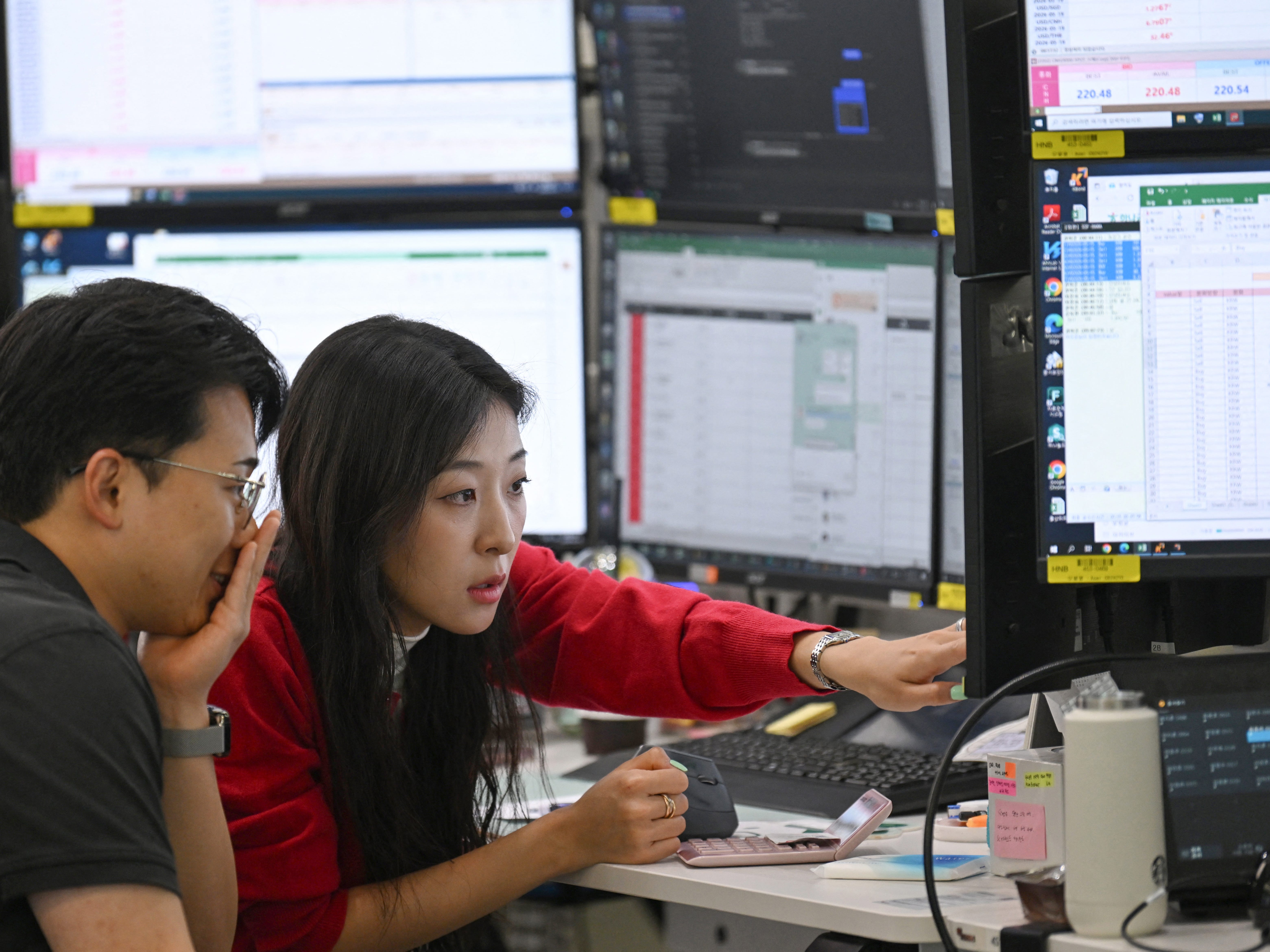
Investors are increasingly looking beyond today's AI-driven chip boom to when new supply could cool the cycle.Jung Yeon-je/AFP/Getty Images -
South Korea's Kospi tumbles as chip giants SK Hynix and Samsung come under heavy selling.
Japan's Kioxia slides more than 15%, extending a global semiconductor sell-off into Asia.
AI demand remains strong, but investors are questioning how long the chip boom can last.
South Korea's benchmark Kospi index is trading wildly again on Thursday after an overnight rout in US semiconductor stocks rippled through Asia.
The latest bout of volatility may be saying less about the health of the country's chipmakers than about what comes after their blockbuster run.
South Korea's benchmark Kospi index fell as much as 7%, with heavyweights SK Hynix and Samsung Electronics both dropping about 10% before paring losses.
The chip selloff spilled into Japan, where chipmaker Kioxia — the country's most valuable company — tumbled more than 15%, dragging the Nikkei 225 down more than 2%.
"Profit-taking appears to be a key driver," Fabien Yip, a market analyst at IG, wrote in a note. She pointed out that even after Thursday's declines, SK Hynix remains up more than 200% this year, while Kioxia has surged 600%.
South Korea has been one of the world's best-performing stock markets this year, fueled by a surge in semiconductor and AI-related shares. The strong rally has left the market more susceptible to sharp pullbacks.
Thursday's selloff comes even as demand for memory chips remains strong.
Advertisement
On Wednesday, Morningstar raised its fair value estimates for both Samsung Electronics and SK Hynix. Equity analyst Jing Jie Yu said "the current memory upcycle is tracking substantially stronger than expected," citing tight supply, resilient AI demand, and long-term supply agreements that are improving earnings visibility.
Yu also highlighted the question increasingly confronting investors: How long today's favorable pricing environment can last before new supply catches up?
"Memory valuations not only move on pricing momentum, but also on pricing duration," Yu wrote. He said he expects a massive increase in memory supply over the next two years to lead to a downturn in 2029 and 2030 as long-term agreements expire.
The uncertainty extends beyond chip stocks.
Yip said "volatility is expected to pick up further" ahead of Thursday's US nonfarm payrolls report.
He also noted that speculative short positions in the Japanese yen have climbed back to July 2024 levels, when a currency intervention and a Bank of Japan rate hike triggered a sharp carry-trade unwind.
If you enjoyed this story, be sure to follow Business Insider on Yahoo.
Source: “AOL Money”
