


Warren Buffett’s Successor Just Bought $10 Billion of This AI Stock, and It’s Not Apple
Warren Buffett’s Successor Just Bought $10 Billion of This AI Stock, and It’s Not Apple
Thomas Niel, The Motley FoolFri, November 20, 2026 at 9:20 AM UTC
1
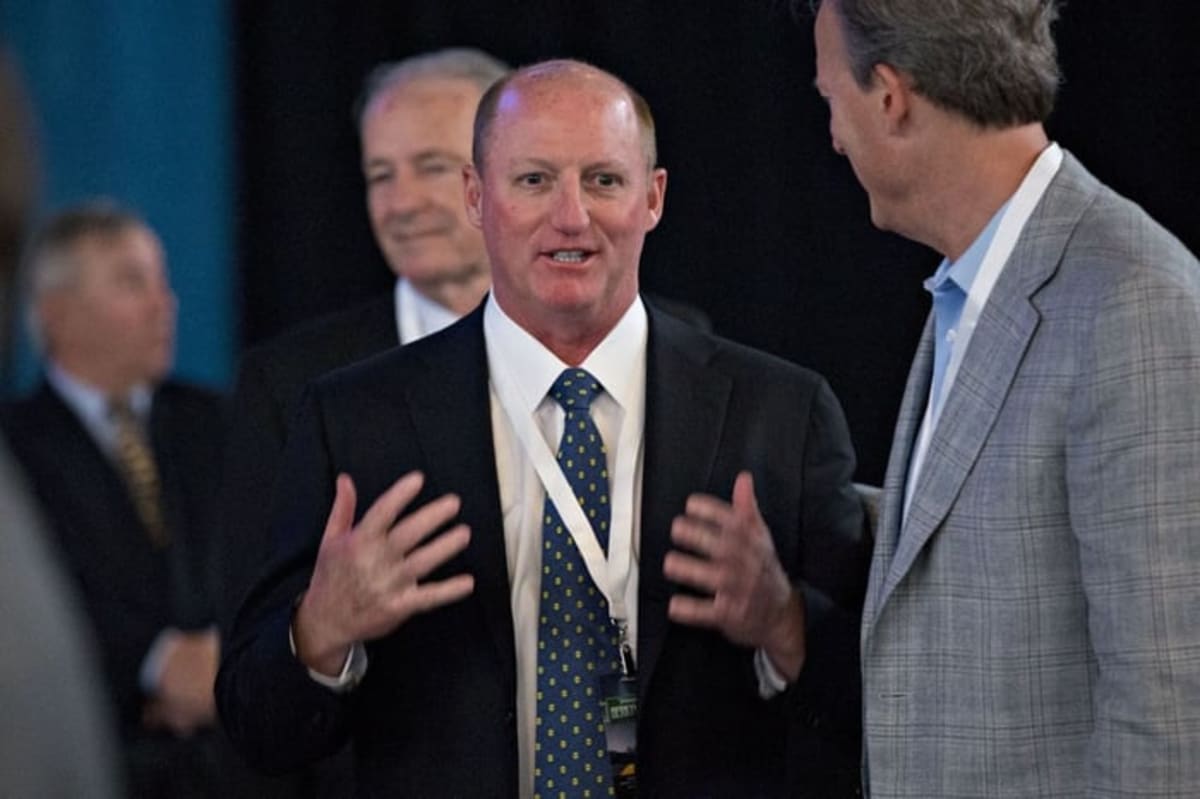
Greg Abel. Image source: Getty Images.Key Points -
Greg Abel has made some major deals since taking charge at Berkshire Hathaway, but his largest thus far is his increased investment in Alphabet.
Berkshire purchased $10 billion in newly issued shares of Alphabet as part of a $90 billion private placement.
Base any decision to buy on long-term fundamentals, not on who's buying.
Motley Fool Issues Rare "Total Conviction" Buy Alert ›
Since taking the helm as chief executive officer of Berkshire Hathaway (NYSE:BRKA) (NYSE:BRKB) in January, Greg Abel has made several major acquisitions and investments. These include the purchase of homebuilder Taylor Morrison, the sale of long-held positions in stocks such as Mastercard and Visa, and a ramp-up in the repurchase of Berkshire Hathaway shares.
But among the changes to the Warren Buffett investments made by his predecessor, Abel's biggest deal thus far has been further investment in Google parent Alphabet (NASDAQ:GOOG) (NASDAQ:GOOGL), increasing the company’s position by $10 billion last June. With this further investment, Abel seems to be making Alphabet a core holding, perhaps as a long-term bet on the artificial intelligence (AI) revolution.
Missed AI’s "Act 1"? Act 2 Could Be 15x Bigger. Most investors think they missed the AI boat because they didn't buy Nvidia in 2005. But according to our analysts, we’re only at the end of "Act 1"—the R&D phase. "Act 2" is the global rollout. Continue »
Why Berkshire has put nearly $30 billion into Alphabet
In total, Berkshire Hathaway now owns about 106 million Alphabet shares, worth around $30.1 billion. It has been building up this position since 2025, with Abel's predecessor Warren Buffett disclosing in an interview that he, not Abel, "initiated the position."
Irrespective of who has been driving these purchases, they have persisted under Abel's watch. During the first half of 2026, Abel added to the original 17.8 million-share position through open-market purchases before making the aforementioned $10 billion investment, part of an $90 billion private placement raised by the Google and YouTube parent.
Berkshire has participated in private placements before, making large direct investments in several companies during the financial crisis of 2007-2009. Still, this $10 billion deal marked a unique situation: Berkshire investing in a company to fund its growth, not merely to help it shore up its financials.
Hence, it seems that Berkshire's motivation for this investment largely reflects bullishness about the generative AI growth trend. Also interesting is that it has concentrated this supposed AI wager in Alphabet shares rather than on additional shares of another core Berkshire holding, Apple (NASDAQ:AAPL). Berkshire last trimmed its Apple position in Q4 2025, but so far in 2026 it has neither increased nor reduced it.
The takeaway for investors
Although Berkshire ramped up its Alphabet position during Q1 and Q2, it did not add to it during Q3. Is this a sign that investors shouldn't necessarily ride Berkshire's coattails by starting a position today? On one hand, since Berkshire made its initial investment, the shares have surged, rising from less than $200 per share in late 2025 to about $284 as of Nov. 18.
On the other hand, back in the summer, Alphabet traded for almost $400 per share, with the recent cooldown in enthusiasm for AI stocks driving a steep pullback. The shares now trade below the roughly $350 per share Berkshire paid for the $10 billion in stock acquired in the private placement. In terms of valuation, the stock also appears reasonably priced at present price levels.
Advertisement
Currently trading for less than 20 times forward earnings, the shares trade at a discount to other budding AI hyperscalers among Magnificent Seven stocks. Microsoft (NASDAQ:MSFT), for instance, trades for more than 25 times forward earnings. To be sure, there's a reason investors have started pricing in a discount. The jury's still out on whether big tech's heavy investment in AI infrastructure, totaling hundreds of billions in capital investment, will translate into worthwhile returns in the long run.
Alphabet is making between $180 billion and $190 billion on AI-related capital expenditures this year alone, which represents a pretty big wager, even for a trillion-dollar company. Furthermore, it's unclear whether the dust has settled on this recent AI sell-off. In short, I would base a decision to invest in Alphabet on its fundamentals, not on who's buying or, as it stands today, who's not buying.
Should you buy stock in Berkshire Hathaway right now?
Before you buy stock in Berkshire Hathaway, consider this:
The Motley Fool Stock Advisor analyst team just identified what they believe are the 10 best stocks for investors to buy now… and Berkshire Hathaway wasn’t one of them. The 10 stocks that made the cut could produce monster returns in the coming years.
Consider when Netflix made this list on December 17, 2004... if you invested $1,000 at the time of our recommendation, you’d have $322,605!* Or when Nvidia made this list on April 15, 2005... if you invested $1,000 at the time of our recommendation, you’d have $927,581!*
Now, it’s worth noting Stock Advisor’s total average return is 790% — a market-crushing outperformance compared to 202% for the S&P 500. Don't miss the latest top 10 list, available with Stock Advisor, and join an investing community built by individual investors for individual investors.
See the 10 stocks »
*Stock Advisor returns as of November 20, 2026.
Thomas Niel has no position in any of the stocks mentioned. The Motley Fool has positions in and recommends Alphabet, Apple, Berkshire Hathaway, Mastercard, Microsoft, and Visa. The Motley Fool has a disclosure policy.
Source: “AOL Money”
